The Kalalau Trail: Kauai's Hardest Hike, Explained
The Kalalau Trail is Kauai's hardest hike: 11 miles of Na Pali cliffs each way. Permits, the day-hike section to Hanakapi'ai, and easier ways to see the coast.
 Written with Kainoa Kealoha, Kauai tour specialist and island experience guide
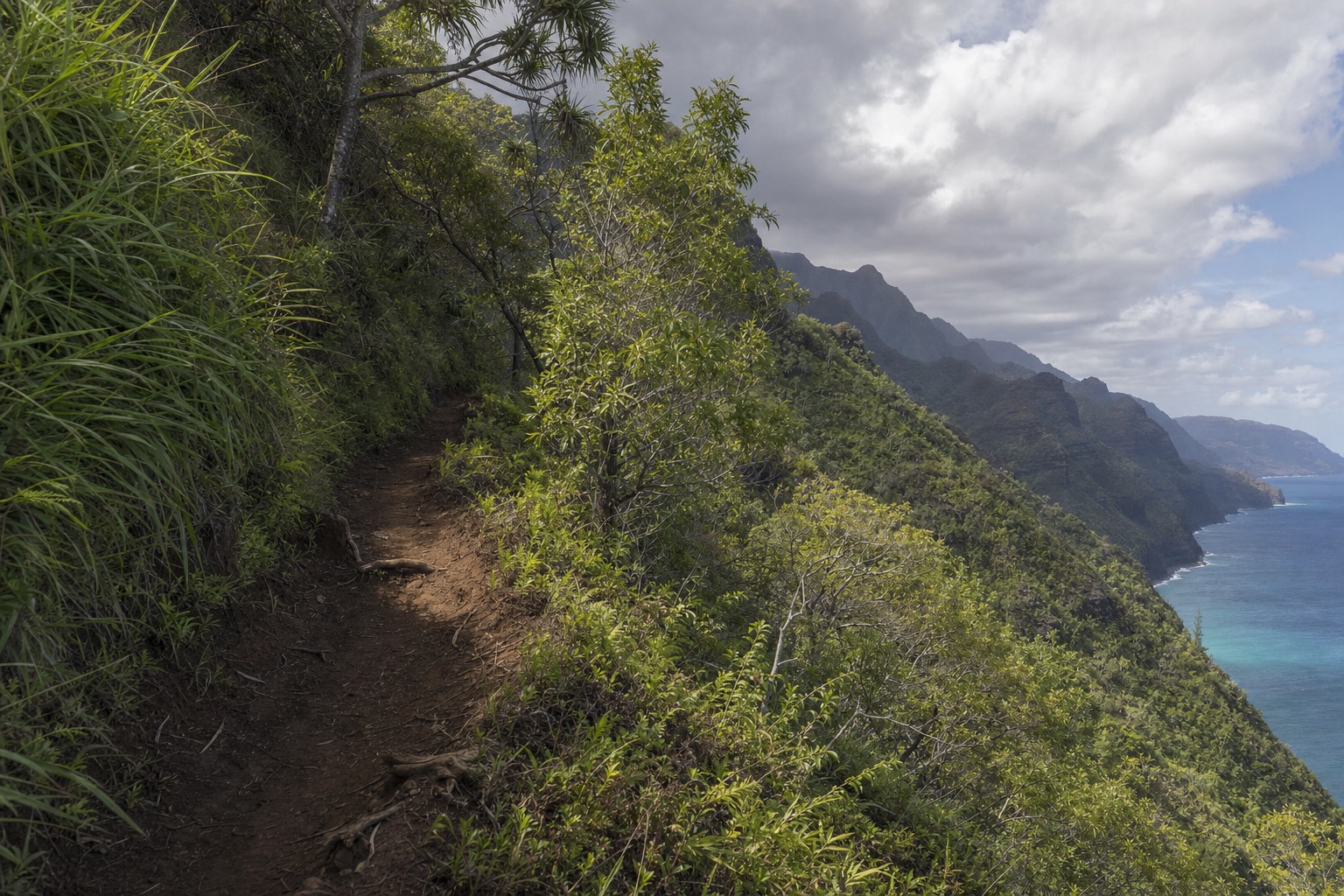
Somewhere past Hanakapi'ai the trail stops pretending. The tread narrows to a ribbon of red dirt cut into the cliff face, the ocean works the rocks far below, and there is no railing, no cell signal, and no shortcut home. People fly across an ocean to hike this. Plenty of them turn around inside the first two miles, soaked and grinning, and that is a perfectly good version of the trip too.
What is the hardest hike in Kauai?
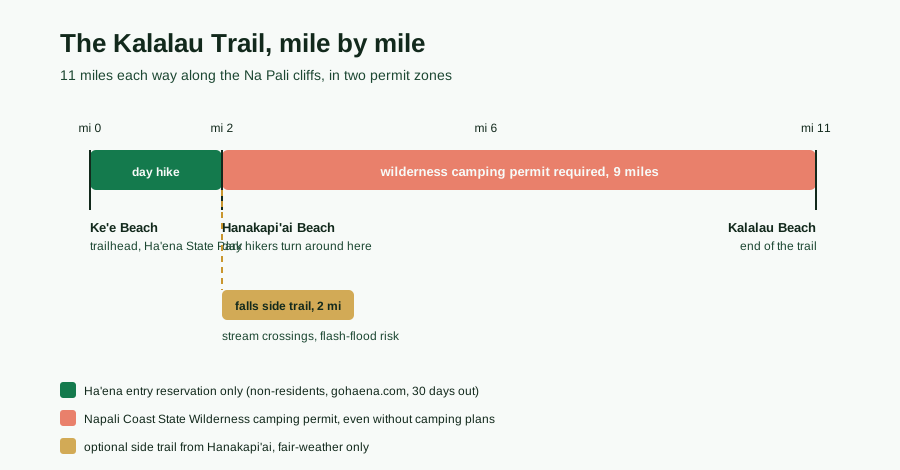
The Kalalau Trail. It runs 11 miles each way along the Na Pali cliffs from Ke'e Beach to Kalalau Beach, with constant climbing, stream crossings, exposed cliff-cut sections, and no road out. Most people who attempt the full trail camp overnight under permit; day hikers turn around at Hanakapi'ai.
Nothing else on the island argues with it. The Na Pali Coast is roughly 17 miles of cliffs rising to more than 3,000 feet, and the Kalalau Trail is the only land route through it, sawing in and out of hanging valleys the whole way. The state's own Kalalau Trail page spells out the rules and hazards, and hikers should treat that page as the source of truth before committing. The difficulty is not one brutal climb but accumulation: relentless up-and-down, mud that turns the tread to grease, streams that rise with rain falling somewhere you cannot see, and sun with no shade for long stretches.
There is also no bailout. Once you pass Hanakapi'ai, the only ways out are back the way you came or onward to Kalalau Beach, which is why the state manages everything beyond that point as wilderness with a permit system.
| Section | Miles (one way) | Permit needed | Difficulty |
|---|---|---|---|
| Ke'e Beach to Hanakapi'ai Beach | 2 | Ha'ena State Park entry reservation for non-residents | Strenuous day hike; steep, muddy, one stream crossing |
| Hanakapi'ai Falls side trail | 2 (side trail) | Same Ha'ena entry reservation | Repeated stream crossings, flash-flood risk |
| Hanakapi'ai to Kalalau Beach, past Hanakoa | 9 | Napali Coast State Wilderness camping permit | Exposed, committing, overnight territory |
Do you need a permit?
Yes, two systems apply. Everything past Hanakapi'ai requires a Napali Coast State Wilderness camping permit, even if you do not plan to sleep. And just to start the trail, non-residents need a Ha'ena State Park reservation from gohaena.com, released 30 days out; they sell out fast.
Work backward from the trailhead. The Kalalau Trail begins at Ke'e Beach inside Ha'ena State Park, and non-residents cannot simply drive up: entry and parking run on advance reservations through gohaena.com, released 30 days ahead, and they routinely sell out. Miss the reservation and your hike ends in the parking lot. Shuttle slots and parking slots are both part of that system, so decide how you are arriving before the calendar opens.
The second layer covers the wilderness. Hiking beyond Hanakapi'ai toward Hanakoa and Kalalau requires a Napali Coast State Wilderness camping permit, and the DLNR trail page is explicit that this applies past Hanakapi'ai whether or not you intend to camp. In practice the full trail is an overnight undertaking anyway; 22 miles round trip on this terrain is not a sane single day for almost anyone. Permits are limited and prized, so people plan trips around winning them. Timing helps too: our best time to visit Kauai guide covers the drier months, which matter far more here than anywhere else on the island.
How hard is the day-hike section?
The first 2 miles to Hanakapi'ai Beach are the sampler most visitors do, plus an optional 2-mile side trail up to Hanakapi'ai Falls. Call it strenuous: steady climbs, winter mud, and stream crossings that flash-flood in rain. Allow most of a day for the full beach-and-falls round trip.
Do not let the mileage fool you. Two miles here is not two miles on a mainland rail trail. The route climbs immediately out of Ke'e, drops just as steeply to the beach, and does most of it on tread that ranges from rooty to slick. The reward arrives fast, though: within the first half mile you are looking down the whole run of the coast, the exact view on half the postcards on the island.
Two hazards deserve respect. The streams flash-flood, rising in minutes from rain falling high in the valley, and the rule is absolute: never cross rising or brown water, wait it out instead. And the ocean at Hanakapi'ai Beach is genuinely dangerous, with rip currents and sneaker waves and no lifeguard; treat it as a place to look, not swim. Winter multiplies the mud and the stream risk, which is why the falls side trail, with its repeated crossings on the way up the valley, is a fair-weather add-on. Start early, and check the forecast the morning you go, not the night before.
| Prep item | The call | Winter (Oct-Apr) note |
|---|---|---|
| Reservations | Ha'ena entry via gohaena.com, 30 days out | Same system year-round, book the moment slots open |
| Footwear | Grippy trail shoes you can rinse | Expect grease-slick mud on every descent |
| Water and food | Carry more than a beach day needs | Streams are hazards, not taps |
| Weather check | Morning-of forecast, watch the valley clouds | Flash-flood risk peaks with winter rain |
| Timing | Start early, beat heat and crowds | Shorter daylight; turn around on schedule |
How do you see the Na Pali Coast without the hike?
Three ways: by boat along the base of the cliffs, by helicopter over them, or from the Kalalau and Pu'u o Kila overlooks in Koke'e at the top. The boat is the most popular and the one we can vouch for by the numbers: a Na Pali cruise out of Port Allen.
The boat sees the coast the way it faces: from the water, cliffs stacking up for 17 miles, sea caves, waterfalls, dolphins when they choose. The Lucky Lady catamaran from Kauai Sea Tours holds 4.7 across 1,613 Viator reviews with a Badge of Excellence and runs about 5.5 hours from Port Allen with breakfast treats, a deli lunch, an open bar, and snorkel gear aboard; snorkel stops are conditional on conditions, especially in winter. Compare routes on our Na Pali boat tours page, then book the Check live availability & prices on Viator for your date; live pricing is on the listing, and most departures cancel free up to 24 hours before, per the listing. Our is the Na Pali boat tour worth it guide weighs the trip in full.
From the air, the cliffs become topography: hanging valleys the trail threads through, and interior country no road touches, on an island roughly 70% unreachable by road. Browse the helicopter tours page for the verified flights. And from the top, the Kalalau and Pu'u o Kila overlooks in Koke'e stare straight down into the Na Pali valleys at the end of Route 550, which dead-ends there; no road continues to the north shore. Non-residents pay $5 per person plus $10 per vehicle, card only, and cloud fills the valleys by late morning, so go early. The Waimea Canyon tours page covers the guided version, and our Waimea Canyon visit guide has the full overlook playbook.
| Way to see Na Pali | Effort | Time | What you get | Access and cost notes |
|---|---|---|---|---|
| Kalalau Trail | Maximal, overnight for the full trail | 1-2+ days | The cliffs from inside them | Ha'ena reservation plus wilderness camping permit |
| Boat cruise | None | About 5.5 hours | Full 17 miles from sea level, caves and wildlife | Live price on the listing, free cancel to 24 h per the listing |
| Helicopter | None | Part of a longer island flight | Cliffs plus roadless interior from above | Passengers weighed at check-in, weight-based seating |
| Koke'e overlooks | A drive and short walks | Half day from the south shore | Straight down into the Na Pali valleys | $5 per person + $10 parking, card only, clouds by late morning |
What permits do you actually need, and when do you get them?
Two separate systems, easy to conflate. A Ha'ena State Park reservation from gohaena.com gets you to the trailhead at all, non-residents included, released 30 days ahead and prone to selling out. A Napali Coast State Wilderness camping permit is the separate requirement for anything past Hanakapi'ai, the 2-mile mark.
People plan a trip around the wrong permit more often than you'd expect. The Ha'ena reservation is not a hiking permit at all; it is an entry and parking system for the state park that happens to contain the trailhead, and every non-resident needs one just to park a car or step off a shuttle at Ke'e, regardless of how far up the trail they intend to go. Miss that reservation and a wilderness permit in your other hand is worthless, because you never reach the trail to use it. The reservation covers a specific arrival window on a specific day, not an open-ended pass, so a change of plans after booking usually means rebooking rather than showing up late and hoping.
The wilderness permit is the second, separate gate, and it only matters once you cross Hanakapi'ai. Day hikers who turn around at the 2-mile mark, the sampler most visitors do, never need it. Anyone continuing toward Hanakoa or Kalalau Beach does, and the state enforces that boundary whether or not a tent comes out of the pack, so "just a long day hike" past that point is not a loophole. Both systems release on their own clocks, and neither guarantees the other. The practical order is to lock the Ha'ena reservation first, since it gates the trailhead itself, then chase the wilderness permit if the full trail is the actual goal.
Both windows move fast enough that a casual "we'll figure it out when we land" plan usually fails. The Ha'ena system in particular sells out inside its 30-day release window during busy seasons, and a family that waits until the week of arrival to check availability is often left choosing between the overlooks at the top of Waimea Canyon or a boat along the base of the cliffs instead of the trail itself. That is not a bad consolation, since roughly 70% of Kauai has no road access at all and the coast rewards viewing from water or air just as honestly as it rewards a hike. It does mean the permit calendar belongs on the same planning list as flights and hotel dates, not something handled from the rental car on arrival day.
Groups traveling together should read the booking screen at gohaena.com carefully rather than assuming one person's reservation automatically covers everyone in the car, since the rules can be specific about who and what a given booking includes. Building in a same-day backup, an earlier or later entry window if the exact slot you wanted is gone, is a small step that keeps an entire trip from hinging on one narrow reservation screen.
Demand for both systems is not flat across the year either. Drier months tend to draw more hikers chasing better footing, which means the Ha'ena calendar gets tighter right when the trail itself is most appealing, and travelers with flexible dates sometimes do better picking shoulder-season windows over the obvious peak-season ones. None of that changes the hard mechanics: reserve Ha'ena first since nothing past the parking lot matters without it, then work the wilderness permit if the plan goes beyond Hanakapi'ai.
| Plan | Ha'ena entry reservation | Wilderness camping permit | Where to get it | Lead time |
|---|---|---|---|---|
| Day hike to Hanakapi'ai (2 miles) | Required for non-residents | Not required | gohaena.com | Released 30 days ahead |
| Hanakapi'ai Falls side trail | Required (same entry) | Not required | gohaena.com | Released 30 days ahead |
| Overnight past Hanakapi'ai to Kalalau | Required to reach the trailhead | Required, even for a single night | gohaena.com plus the state wilderness permit process | Both should be locked well ahead; Ha'ena releases 30 days out |
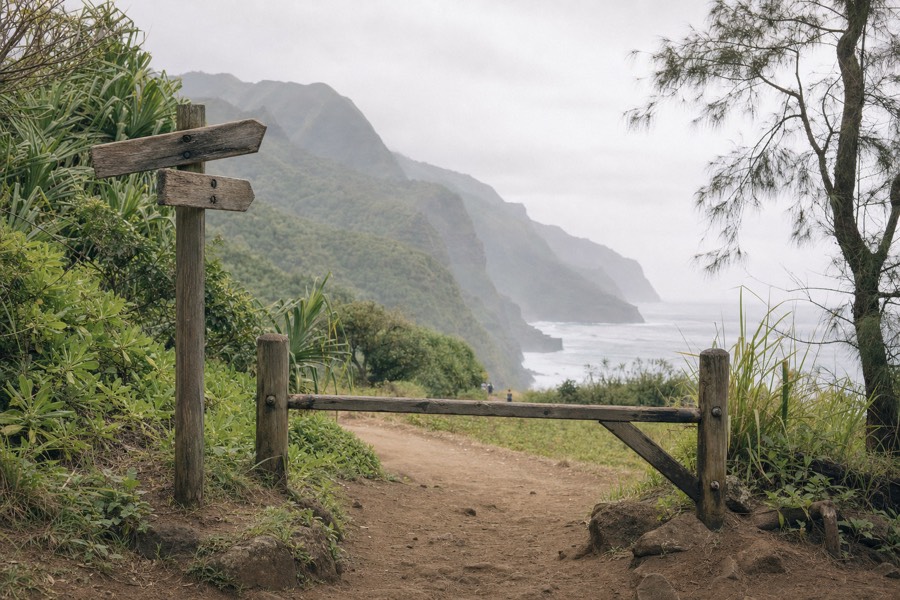
What does Kainoa tell visitors considering the trail?
Kainoa's honest read: the 2-mile day-hike section to Hanakapi'ai is doable for anyone in reasonably good shape, but people consistently underestimate the mud, the exposure, and how much slower the return climb feels. His advice centers on footwear, water, and turning around on a schedule rather than a feeling.
The mistake he sees most is treating the mileage like a flat two miles. It is not. The trail climbs and drops repeatedly, the tread turns to grease when it rains anywhere upstream, and the exposed sections along the cliff leave no room for a wrong step. Visitors flying in from sea-level cities without much recent hiking tend to underestimate how much heat and humidity add to the effort, and the climb back out to Ke'e at the end of the day always seems to surprise people who assumed the return would feel easier since it is the same distance. His rule of thumb: if the round trip to Hanakapi'ai and back does not sound like a real hike to you on paper, it will feel like one by the second mile.
The second mistake is packing like it is a beach day. It is not that either, even for the short section. He tells first-timers to carry more water than feels necessary, wear shoes with real grip rather than sandals or thin-soled sneakers, and bring a way to keep a phone and cash dry for the stream crossing. Reef-safe mineral sunscreen belongs in the bag too, both because the exposed stretches offer no shade and because Hawaii's Act 104 has taken the chemical alternative off store shelves statewide, so it is worth packing before arrival rather than assuming a nearby shop will carry it.
Where his itinerary-planning background shows up most is in how he talks about timing rather than gear. He tells people to check the forecast the morning of the hike, not the night before, since a valley can dump rain overnight and leave streams running high by sunrise even under a clear sky at the trailhead. He is equally firm on the other side of it: know your turnaround time before you start, and if a stream is running high or brown, that is not a hike to push through. It is a day to come back another time, or to swap the plan for one of the no-hike ways to see the same coastline that afternoon instead.
He also fields plenty of questions from travelers deciding whether the Kalalau day-hike belongs on the same trip as a Na Pali boat tour or a Waimea Canyon day, and his answer is usually yes, with the hike scheduled first. Legs are freshest early in a trip, the weather window is unpredictable enough that having a backup day matters, and seeing the coast from the water or the rim afterward lands differently once you have felt a small piece of it underfoot.
On who should reconsider even the short 2-mile section, he is candid rather than discouraging. Anyone with a fresh ankle or knee injury, anyone who struggles on uneven ground at home, and families with young kids who tire quickly and still have to climb back out under their own power should weigh the trail honestly against the calmer alternatives nearby. None of that is a judgment on fitness in general, just an acknowledgment that a coastal cliff trail with no railing and no easy exit is a specific kind of terrain, and the Kalalau and Pu'u o Kila overlooks at the top of Waimea Canyon or a Na Pali boat cruise deliver the same coastline without asking the same of your knees.
| Traveler | Kainoa's honest call | Better fit instead |
|---|---|---|
| Reasonably fit, comfortable on uneven ground | The 2-mile day-hike section suits you | Go, with the gear and timing above |
| Fresh ankle or knee injury | Reconsider even the short section | Koke'e and Pu'u o Kila overlooks, same coastline from above |
| Struggles on uneven ground at home | The exposed, root-and-rock tread will be harder than expected | A Na Pali boat cruise, same cliffs from the water |
| Young kids who tire on the way out | The climb back to Ke'e is the hard part, not the way in | The overlooks or a boat day, no forced return climb |
| Wants the full trail to Kalalau Beach | That is a separate overnight undertaking, not this day-hike | Plan around the wilderness permit calendar first |
The last thing he pushes on is expectations about pace. Two miles out and two miles back sounds like an hour or two of walking to someone used to flat ground, and on this trail it routinely runs closer to half a day once the climbing, the stream crossing, and a rest at the beach are factored in. He treats a rushed return in fading light as one of the riskier moments on the whole route, so he tells people to give the final descent back into Ke'e the same care as the climb out, watch footing over pace, and accept that a slower group is a safer group on wet rock. Building an honest half-day buffer into the schedule, rather than squeezing the hike between two other bookings, is the single change that fixes most of the rushing he sees.
| Item | Why Kainoa says pack it | Skip this instead |
|---|---|---|
| Grippy trail shoes | The tread turns to grease when wet; sandals slide | Flip-flops, thin-soled sneakers |
| More water than a beach day | Streams are hazards, not drinking sources | One small bottle |
| Dry bag or ziplock for phone and cash | One stream crossing on the way to Hanakapi'ai | Loose pockets |
| Early start | Beats heat, crowds, and afternoon cloud | A late-morning departure |
| A hard turnaround time | Daylight and energy run out faster than expected | "We'll see how far we get" |
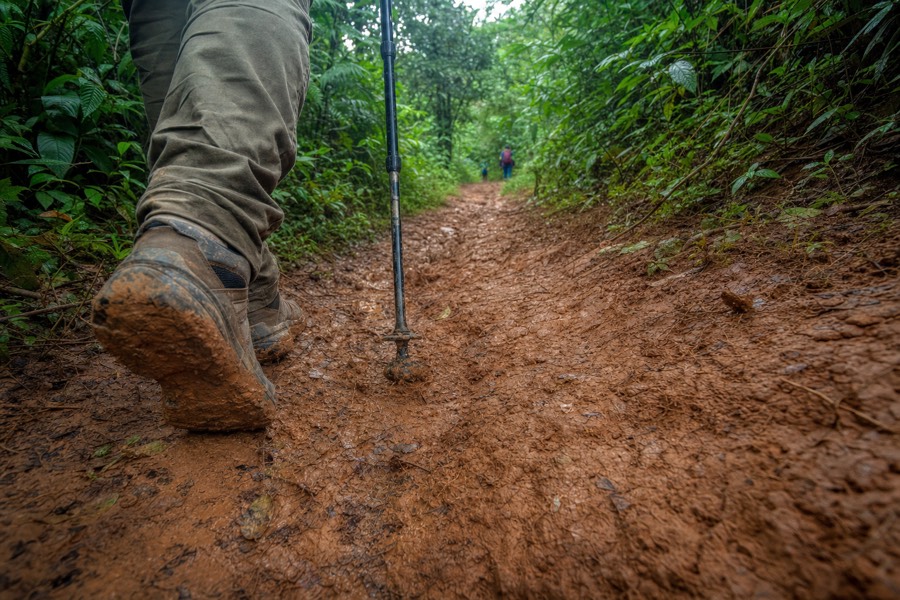
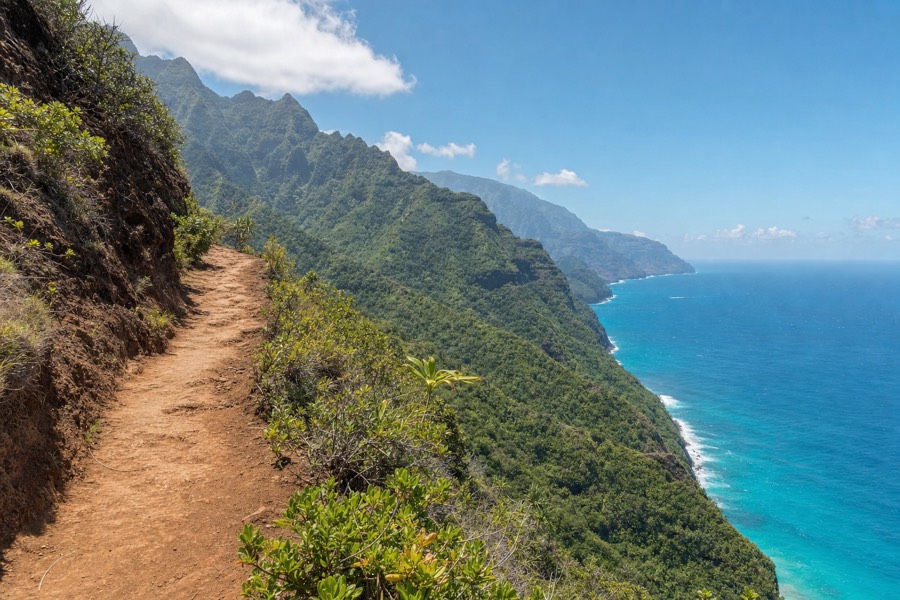
The Kalalau Trail deserves its reputation, and it rewards the people who train for it, win the permits, and hit a dry window. Everyone else still gets the coast. Hike the first two honest miles if the weather allows, then let a boat, a helicopter, or the rim at Pu'u o Kila show you the rest.