Is the Na Pali Boat Tour Worth It?
An honest verdict on the Na Pali boat tour, who it suits, your seasickness odds, month-by-month sea states, and how the two top-rated cruises compare.
 Written with Kainoa Kealoha, Kauai tour specialist and island experience guide
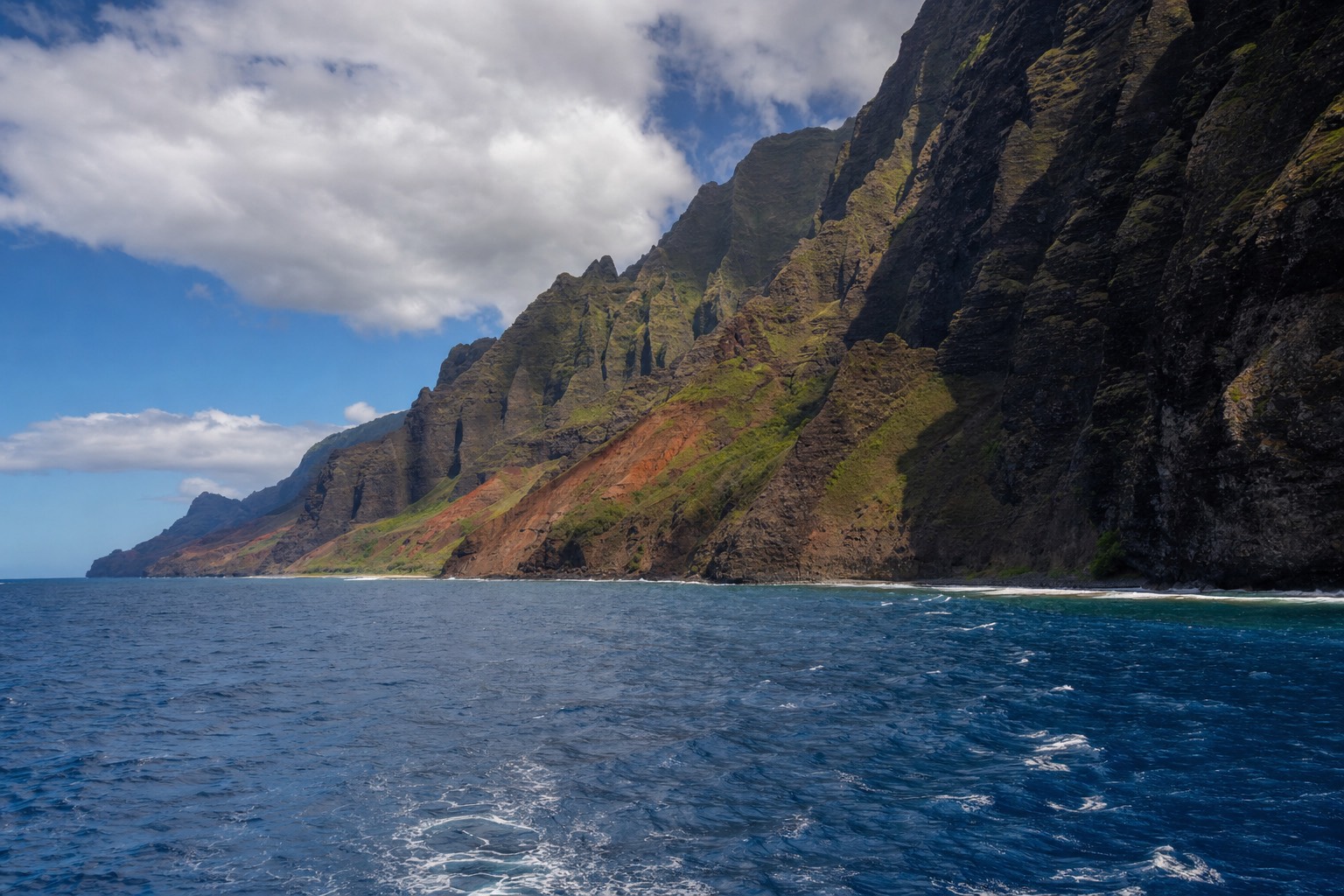
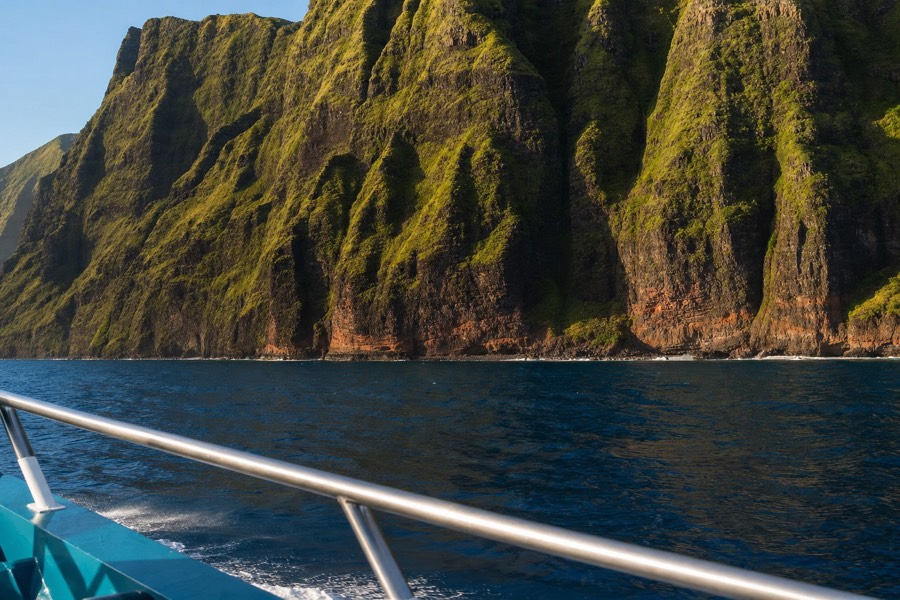
The cliffs do not come into view gradually. Your boat clears the last dry ridge west of Port Allen, the captain turns the bow up the coast, and the Na Pali Coast stands up out of the Pacific all at once: fluted green walls, red where the rain does not reach, falling straight into deep blue water. Photos flatten it. From a deck at sea level it does not flatten at all.
Is the Na Pali boat tour worth it?
For most visitors, yes. The Na Pali Coast runs about 17 miles with cliffs past 3,000 feet and no road along any of it, so a boat is the only way to see the whole run from sea level. Book May through September for calm water and likely snorkel stops; winter trips trade snorkeling for whales.
Kauai has one coastal road and it does not close the loop. Route 550 climbs to the Koke'e rim and dead-ends at Pu'u o Kila, so the northwest quarter of the island is water access or air access, nothing else. That is the whole case for the cruise: five-plus hours on the water gets you the full coastline that drivers never touch. Our Na Pali boat tours page features the two listings we trust, and both make a real morning of it. The Lucky Lady trip from Port Allen runs about 5.5 hours with breakfast treats, a deli lunch, an open bar with beer, wine and Mai Tais, snorkel gear with instruction, a waterslide, and fresh-water showers. The Holo Holo Charters sail runs about 5 hours with continental breakfast, a gourmet deli lunch, soft drinks plus wine and beer, and reef-safe sunscreen provided on board.
The honest caveats: it is a long day on open ocean, snorkel stops are conditional on conditions year-round, and winter swell reshapes the whole product. If your dates fall between October and April, read the season section below before you decide. If they fall in summer, this is one of the easiest yes calls on the island.
Why is the Na Pali Coast so famous?
Na Pali means "the cliffs," and the name undersells it: roughly 17 miles of fluted sea cliffs climbing past 3,000 feet, cut by hanging valleys, with no road along any of it. Every guidebook cover shot of Kauai is this coastline, and boats, helicopters, and one hard trail are the only ways in.
The fame is earned by inaccessibility as much as by scale. On land, the only route along the coast is the Kalalau Trail, 11 miles each way, with everything past Hanakapi'ai requiring a Napali Coast State Wilderness camping permit. Even standing at the trailhead takes planning: non-residents need an advance Ha'ena State Park reservation through gohaena.com, released 30 days ahead, and they sell out. From the mountain side, the Kalalau and Pu'u o Kila overlooks in Koke'e look down into the Na Pali valleys, spectacular and worth the drive, but that is a view into two valleys, not the coast itself, and cloud builds up there from late morning.
So the boat occupies a strange sweet spot. It is the least effort, it covers the most coastline, and it is the only option that adds swimming, whales, and lunch to the itinerary. That combination is why the cruise, not the hike, is the version of Na Pali most visitors actually experience.
Will I get seasick on a Na Pali boat tour?
Maybe. This is open Pacific, not a harbor cruise, and there is swell most days even in summer. Your best defenses are booking inside the May to September calm window, taking your usual remedy before departure rather than after symptoms start, and keeping your eyes on the horizon, not a screen.
Season matters more than the boat. From roughly October through April, winter swell wraps the island: departures shift to the sheltered southwest harbors, rides get lumpier, and captains call snorkel stops day by day. May through September is a different ocean, and it is when both featured boats do their best work. If you are choosing dates around this one factor, our best time to visit Kauai guide breaks the year down in more detail.
Practical points that help. Both featured trips feed you, and a normal amount of food in your stomach beats an empty one. The Lucky Lady's fresh-water showers mean a rough moment does not have to ruin the day. And if you know you are badly prone to motion sickness, there is no shame in seeing this coast from the air instead; our helicopter worth-it guide covers that trade directly.
When should you book: which months are best?
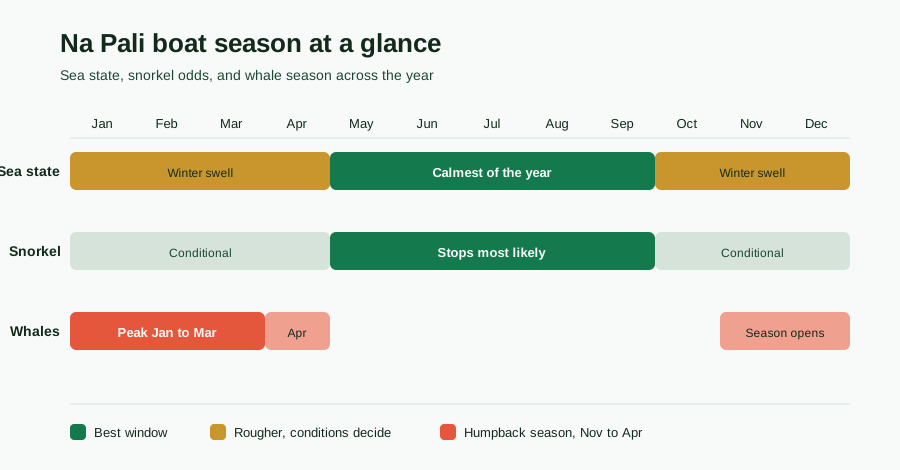
May through September is the calm season: the smoothest rides, the most reliable snorkel stops, and the best odds of a full-coast run. October through April brings winter swell and conditional stops, but it also brings humpback whales, with peak sightings January through March.
| Months | Sea state | Snorkel stops | Whales |
|---|---|---|---|
| May to September | Calmest of the year | Most likely, best conditions | Rare |
| October | First winter swells arrive | Conditional | Before the season |
| November to December | Winter swell, departures favor the southwest | Conditional | Season opens in November |
| January to March | Biggest swell window | Conditional, sometimes skipped | Peak sightings |
| April | Swell easing | Conditional, improving | Tail of the season |
Humpbacks are in Hawaiian waters from November through April, per the NOAA Hawaiian Islands Humpback Whale Sanctuary, whose formal season runs December 15 to May 15. A January cruise that skips the snorkel stop but parks near a breaching whale is not a lesser product, it is a different one. Decide which trip you want before you look at dates. If snorkeling is the point of your day, summer is non-negotiable, and our best snorkeling in Kauai guide covers where the boats actually stop.
Which boat should you book: Lucky Lady or Holo Holo?
Both are strong. The Lucky Lady has the deep review history, the open bar, and the waterslide; the Holo Holo sail scores slightly higher across a much smaller sample and provides reef-safe sunscreen. Families and first-timers tend to fit the Lucky Lady; the sail suits people who want a quieter deck.
| Lucky Lady (Kauai Sea Tours) | Holo Holo Charters sail | |
|---|---|---|
| Platform | Viator | GetYourGuide |
| Rating | 4.7 across 1,613 reviews, Badge of Excellence | 4.8 across 102 reviews |
| Duration | About 5.5 hours | About 5 hours |
| Departure | Port Allen | Confirmed at booking |
| Food and drink | Breakfast treats, deli lunch, open bar with beer, wine, Mai Tais | Continental breakfast, gourmet deli lunch, soft drinks, wine and beer |
| Extras | Waterslide, snorkel gear and instruction, fresh-water showers | Snorkel gear, reef-safe natural sunscreen provided |
| Cancellation | Most departures cancel free up to 24 hours before, per the listing | Most departures cancel free up to 24 hours before, per the listing |
On sunscreen, one detail visitors miss: Hawaii's Act 104 has banned the sale of oxybenzone and octinoxate sunscreens since January 1, 2021, so the Holo Holo habit of handing out compliant mineral sunscreen is genuinely useful, not a gimmick. Our pick for most groups is the Lucky Lady, on the strength of 1,613 reviews and the most complete day on the water; compare both on our Na Pali boat tours page, or book the Check live availability & prices on Viator if your dates are set. Summer mornings sell through first.
Where do the Na Pali boats actually leave from?
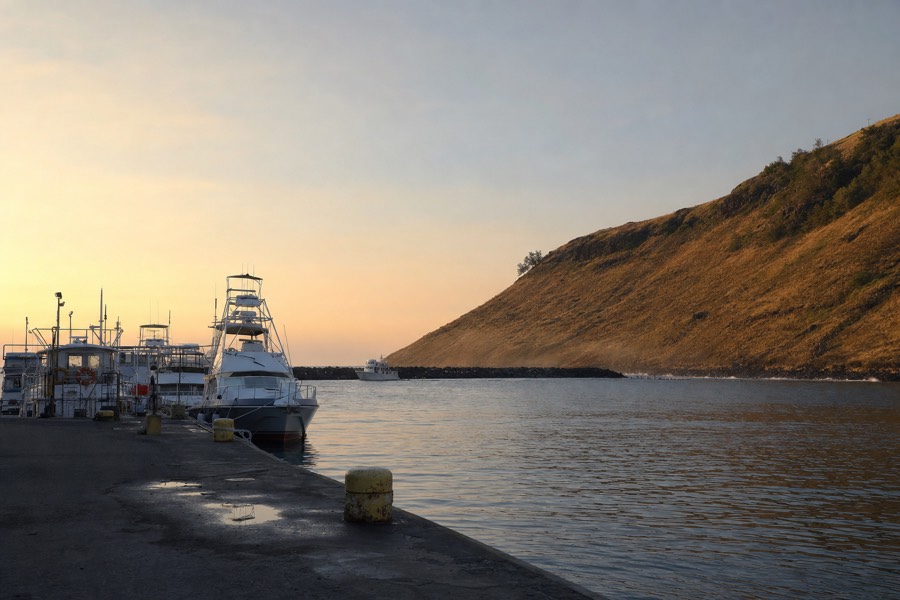
Every featured Na Pali cruise leaves from the south-west coast, out of Port Allen or Kikiaola harbor, and that side of the island runs boats year-round. A seasonal Hanalei departure opens on the north shore roughly from late spring into early fall, when the water there calms enough to launch. Which one is closer depends entirely on where you sleep.
Kauai's one coastal highway does not loop the island, so "closer to the harbor" is not a fixed number, it is a function of your address. Stay in Po'ipu or Koloa and you are already on the south side, a short hop from Port Allen. Stay in Princeville or Hanalei and you are on the opposite shore, with the unlooped road sitting between you and the south-west harbors. That gap is exactly why the seasonal Hanalei option exists: when it is running, it saves north-shore guests the whole drive south.
Lihue and the Coconut Coast, meaning Wailua and Kapa'a, sit in between on the east side. Reaching Port Allen from there means driving down and around the south end of the island rather than across it, since there is no across. None of this changes what happens once you are on the water. It only changes how much of your morning gets eaten before the boat leaves the dock.
This is not a distinction that shows up on a rental car map, either. Kauai's brochures show Route 50 and Route 56 as one continuous ring, but drive it and you learn quickly it is two dead-end roads meeting near Lihue, not a loop. The highway runs out on both ends before it ever reaches the Na Pali cliffs, which is the same reason the coast itself has no road. Your harbor is decided by which end of that broken ring you happen to be sleeping near, more than by which cruise operator you book.
| Where you're staying | Nearest year-round harbor | Relative position | Seasonal alternative |
|---|---|---|---|
| Po'ipu / Koloa (south shore) | Port Allen or Kikiaola | Same side of the island, shortest run | Not needed |
| Lihue / Wailua / Kapa'a (east side) | Port Allen or Kikiaola | Around the south end, moderate drive | Not needed |
| Princeville / Hanalei (north shore) | Port Allen or Kikiaola | Farthest, crossing to the opposite side of the unlooped highway | Hanalei harbor, roughly late spring to early fall only |
None of the harbors require you to arrive hours ahead the way an interisland flight might, but treat the morning like any other outdoor activity with a fixed departure. Give your drive enough room that traffic, a wrong turn, or a coffee stop does not turn into a missed check-in. Boats leave on schedule, not when the last car pulls into the lot.
Pack for the boat like you would for a beach day plus a splash zone. None of it is exotic, but people forget it constantly, usually the sunscreen.
| Bring | Why |
|---|---|
| Reef-safe mineral sunscreen | Hawaii's Act 104 bans sale of oxybenzone and octinoxate sunscreens statewide, so this is the only kind you can legally buy here anyway |
| A light windbreaker or cover-up | Open water runs breezier and cooler than the parking lot, even in summer |
| Your motion-sickness remedy, taken early | Boats do not sell it on board, and departure morning is too late to start |
| A strap or waterproof case for your phone | Spray and wake reach the rail more than first-timers expect |
| A swimsuit under your clothes | Both featured boats provide snorkel gear, but not privacy to change into it |
| A reusable water bottle | Drinks are provided on board, but you'll want water for the drive both ways |
| A light snack before you leave | Boats feed you well once underway, but starting the morning on an empty stomach rarely helps a rolling sea |
Whichever harbor you leave from, plan for the return leg too. A cruise running five to five and a half hours ends with you salt-crusted and sun-tired, and the drive back mirrors whatever drive got you there. North-shore guests tend to build slack into that evening, a casual dinner rather than a tight reservation, more than travelers heading back to Po'ipu, simply because their day covers more of the island's one road.
What Kainoa tells first-timers before the boat day
Kainoa's advice to first-time bookers: treat seasickness prevention as non-negotiable, pick a seat toward the boat's center if you're prone to it, pack light and expect saltwater, and go in knowing the snorkel stop is a maybe, not a promise, on any date, any season.
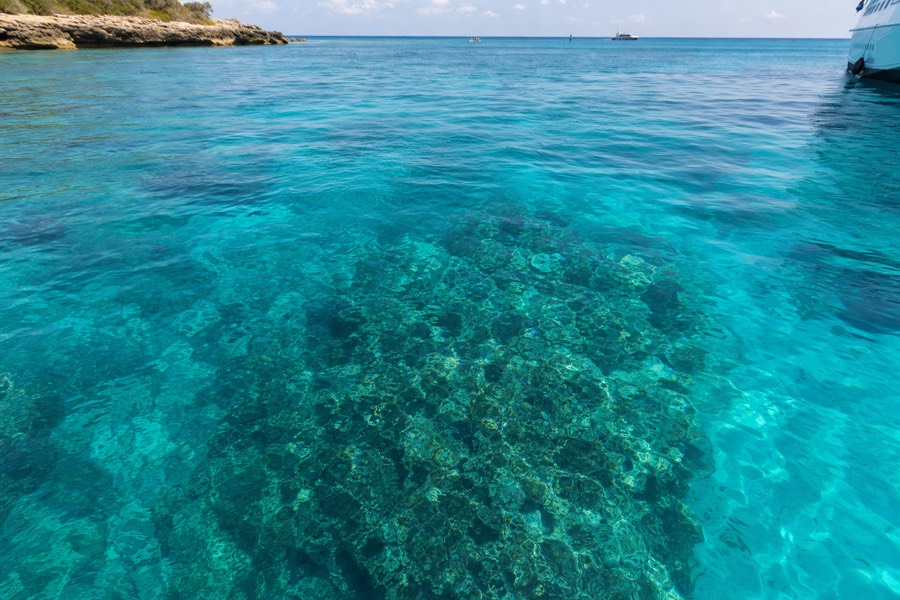
Kainoa has walked plenty of visitors through this decision, and the questions repeat. The one he pushes hardest on is seasickness, because it is the one variable people can actually control. His advice: whatever remedy you use, take it before you feel anything, not after, and if you are new to boats generally, ask about seating toward the center of the vessel rather than the bow or stern, where motion is felt least. He also tells people not to over-plan the day around the snorkel stop specifically. Both featured boats carry gear and both stop when conditions allow it, but "when conditions allow" is doing real work in that sentence, and no operator can promise open water in advance.
The other pattern he sees is what people forget to pack, and it is rarely the big stuff. Sunscreen, yes, but also a way to keep a phone dry, a layer for the ride back once the wind picks up, and enough cash or card flexibility to handle parking near the harbor without a scramble. None of it is complicated. It just needs to happen the night before, not in the truck at the dock.
He also tells first-timers to set expectations for the ride itself, not just the stops. The run out to the cliffs and back covers real open ocean both ways, and the scenery is not constant: calmer water sits near the harbor, livelier water further up the coast. Treat the whole day as the experience, not just the minutes when the cliffs first come into view, and the choppier stretches read as part of the trip instead of an inconvenience to get through.
| Who this suits | Who should think twice |
|---|---|
| Travelers comfortable on boats, or willing to prep for motion sickness properly | Anyone with severe, unmanaged motion sickness and no remedy plan |
| Groups who want swimming, food and a full coastline view in one outing | Visitors who want a guaranteed snorkel stop on a fixed date |
| Summer travelers, May through September, chasing calm water | Winter travelers who need certainty over whale-season variability |
| First-timers booking early in their trip, leaving room to rebook if weather cancels | Anyone booking their only free day, with no slack if the boat cancels |
The last piece of advice Kainoa gives almost everyone, regardless of experience: book the boat day early in the trip, not late. Both featured cruises let most departures cancel free up to 24 hours ahead, so an early booking costs nothing if plans shift, but it buys a real rebook window if weather or surf cancels the day outright. A weather push on day two of a nine-day trip is a minor shuffle. The same push on day eight, with a flight home the next morning, is not.
Boat, helicopter, or the Kalalau Trail?
The boat gives you the most coastline for the least effort and the only swim. The helicopter adds the roadless interior in the shortest time at the highest cost per hour. The trail is the cheapest and by far the hardest, and only the first two miles are open to day hikers.
| Option | Time | Effort | What you get | Booking notes |
|---|---|---|---|---|
| Boat cruise | About 5 to 5.5 hours | Low | All 17 miles from sea level, snorkeling in season, whales in winter | Year-round from the southwest harbors |
| Helicopter | Shortest of the three | None | The coast plus the roadless interior, about 70% of Kauai has no road | Passengers weighed at check-in |
| Kalalau Trail | Full day to multi-day | Highest | The cliffs underfoot; day hikers turn around at Hanakapi'ai, 2 miles in | Ha'ena reservation required, permit beyond Hanakapi'ai |
| Koke'e overlooks | Half day by car | Low | Kalalau and Pu'u o Kila views into the valleys from above | $5 per person plus $10 parking, card only; cloud builds late morning |
Here is where we land. If you have one clear-weather day on Kauai and average sea legs, the boat is the single best-value way to meet this coastline, and in summer it is close to a sure thing. Winter travelers should book with whale eyes and snorkel-optional expectations. Either way, go early in your trip: if weather cancels your departure, most listings let you rebook free, and you will still have days left to use them.