The Non-Touristy Side of Kauai
The least touristy part of Kauai is the west side: Waimea, Hanapepe's Friday art night, Kekaha, and Polihale, plus quieter trades for the famous stops.
 By Kainoa Kealoha, Kauai tour specialist and island experience guide
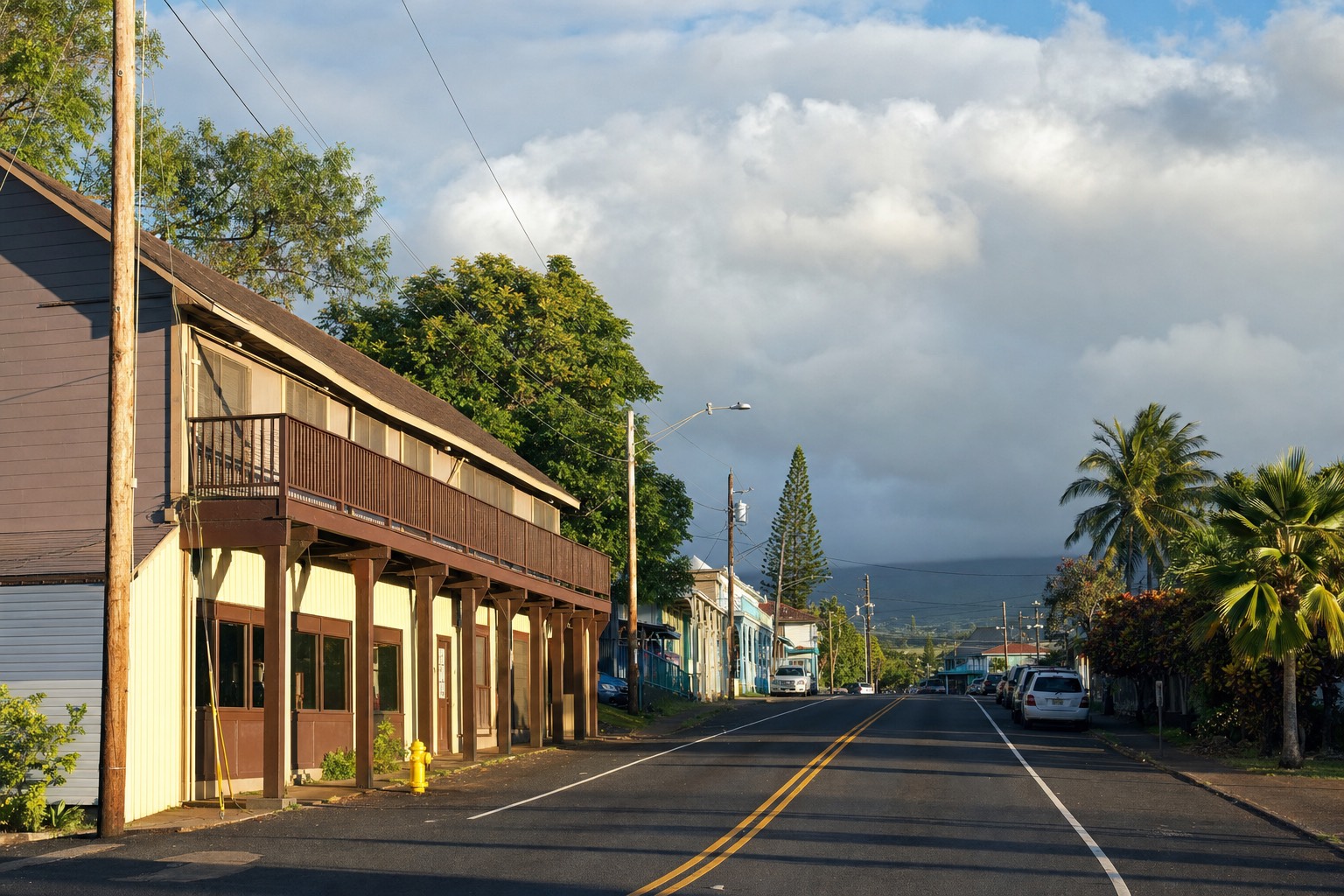
Drive west out of Po'ipu and the island changes temperature. The resort landscaping stops, the coffee fields start, and the towns begin looking like they belong to the people who live in them: Hanapepe with its wooden storefronts and swinging bridge, Waimea with its plantation-era main street, Kekaha where the long west-side beach runs on with nobody on it. This is the part of Kauai most visitors see through a windshield on the way up the canyon, if they see it at all. It is also the answer to the question this post exists for.
What is the least touristy part of Kauai?
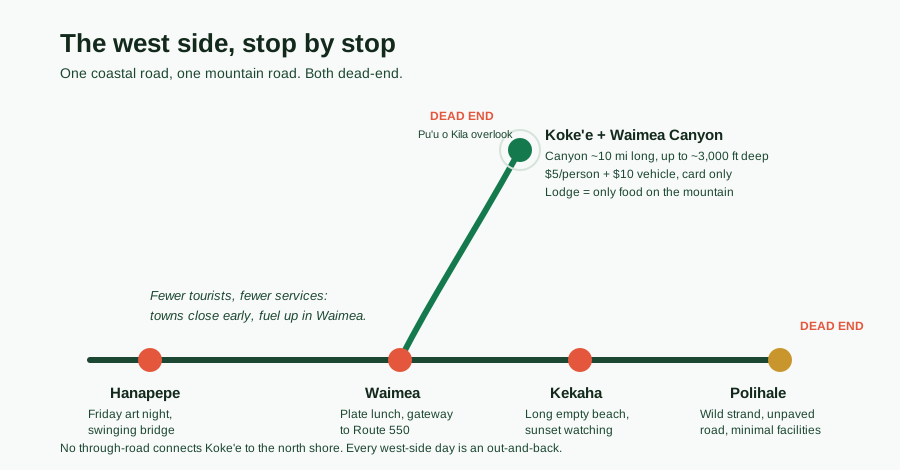
The west side. Waimea, Hanapepe, and Kekaha carry a fraction of the visitor traffic of Po'ipu or the north shore, and the road past them ends at Polihale's long wild strand. Honesty requires the flip side: fewer tourists means fewer services, earlier closings, and more distance from everything.
The west side stays quiet for structural reasons, not because it lacks anything worth seeing. It is the far end of the one coastal road from most hotels, it has no resort cluster, and its headline attraction, Waimea Canyon, pulls people up the mountain and back out without a town stop. Their loss. The towns are the most textured on the island, and the light in the late afternoon, with Ni'ihau floating offshore, is worth the drive by itself.
| West-side stop | What it is | When it's best |
|---|---|---|
| Hanapepe | Old wooden storefronts, galleries, the swinging footbridge | Friday evening for art night; sleepy and photogenic otherwise |
| Waimea town | Plantation-era main street, plate lunch, canyon gateway | Morning before the canyon, or late afternoon light |
| Kekaha | Long, uncrowded west-facing beach, local neighborhood | Sunset; watch the surf, swim cautiously if at all |
| Polihale | Wild strand at the literal end of the road, unpaved approach | Sunset with a capable car and supplies |
| Koke'e | Mountain forest, quieter trails, canyon and Na Pali overlooks | Early morning, before cloud builds late morning |
What is there to actually do in Waimea and Hanapepe?
Hanapepe's Friday night art walk is the west side's one genuine event: galleries open late, food vendors set up, and the old main street fills with a mixed local-and-visitor crowd. Any other day, walk the swinging bridge, browse the storefronts, then eat plate lunch in Waimea before or after the canyon.
Hanapepe bills itself as Kauai's biggest little town, and its single street of weathered wooden buildings has doubled as a movie set more than once. Friday evening is when to aim for it; the rest of the week it is a fifteen-minute wander and all the better for it. The swinging bridge, a plank-and-cable footbridge over the Hanapepe River, costs nothing and wobbles exactly as much as you hope.
Waimea works as the west side's base camp. It is where Route 550 starts climbing to the canyon, and its bakeries and plate-lunch counters are the honest answer to "where should we eat out west," a question covered at length in where locals eat on Kauai. One cultural footnote worth knowing: the famous "Grand Canyon of the Pacific" line about Waimea Canyon is traditionally attributed to Mark Twain, but the attribution has never been proven, so enjoy the phrase without betting on the source.
Are Koke'e's trails really quieter than the famous hikes?
Yes, by a wide margin. While the Kalalau Trail runs on a reservation system, Koke'e's forest and rim trails absorb their visitors easily, and mid-week mornings can feel private. You still pay the state-park entry, $5 per person plus $10 per vehicle for non-residents, card only, and services stop at Koke'e Lodge.
The mountain rewards early starts twice over: empty trails, and clear views, since cloud typically builds by late morning over both Waimea Canyon and the Na Pali overlooks at the top. The canyon itself runs roughly 10 miles long and up to about 3,000 feet deep, and Route 550 dead-ends at the Pu'u o Kila overlook, staring into the Kalalau Valley. There is no through-road to the north shore, so build the day as an out-and-back.
Know what "quiet" costs up here. Koke'e Lodge is the only food service on the entire mountain, fuel is back down in Waimea, and cell coverage fades in the forest. Carry water and layers; the summit country is far cooler than the coast. The full lookout-by-lookout plan is in the Waimea Canyon visit guide.
If you would rather hand the logistics to someone else, there is a well-worn guided version: a roughly ten-hour narrated day with hotel pickup that does the canyon, the Koke'e overlooks, and a lunch stop at the Lodge with a 10 percent discount per the listing, rated 4.6 across 609 Viator reviews. Details and alternatives sit on the Waimea Canyon tours page, or book the Check live availability & prices on Viator and spend the drive looking instead of steering.
What non-touristy things can you do anywhere on the island?
Get up early. The single most reliable way to have Kauai to yourself is to be anywhere famous before eight in the morning, when the light is best anyway. Beyond that: trade each famous stop for its quieter twin, eat where the trucks and lunch counters are, and give one evening to a small-town event instead of a show.
The early-morning trick works because visitor rhythm here is remarkably uniform: breakfast, beach by ten, famous stop by eleven. Beat that wave and even the busiest places feel like a different island. The trades below are the site's working list:
| The famous version | The quieter trade | What you give up |
|---|---|---|
| Po'ipu beach day | Kekaha or Polihale on the west side | Lifeguards, easy parking, calm-water reliability |
| Kalalau Trail day hike | Koke'e forest and rim trails | The sea-cliff drama, the bragging rights |
| Big commercial luau night | Hanapepe Friday art night | The show and the imu ceremony; different evening entirely |
| North-shore lookout crawl | Canyon lookouts at dawn | The ocean backdrop; you get the canyon instead |
| Resort dinner | Plate lunch in Waimea town | Tablecloths |
A note of honesty about the whole exercise: "non-touristy" is a spectrum, not a secret door. The west side has visitors too, especially mid-day on the canyon road. What it does not have is crowds, and on Kauai that difference is enough. For the beaches side of that trade, the prettiest beaches post marks which famous strands earn their traffic, and the Secret Beach post covers the best-known "hidden" one.
When do the famous spots actually empty out?
First thing in the morning and in the last hour of light. Mid-day belongs to the crowds nearly everywhere, tour schedules cluster between nine and three, and by late afternoon the lots at the famous stops begin to drain. Plan famous places for the edges of the day and the west side for the middle.
| Time of day | Famous stops | West side |
|---|---|---|
| Before 8 am | Empty lookouts, clear mountain views | Bakeries open, towns waking up |
| 9 am to 3 pm | Peak crowds, full lots, building cloud up high | Quiet as ever; canyon road busiest section |
| 4 pm to sunset | Draining out, softening light | Best light of the day, Polihale sunset window |
| After dark | Closed or empty | Friday only: Hanapepe art night |
The west side will not perform for you, and that is the appeal. It offers a wobbling footbridge, a plate lunch, a canyon going gold at seven in the morning, and a beach at the end of the pavement with your name on none of it. Give it a full day, not a drive-through, and it quietly becomes the part of the trip you talk about most.